The sand is burying our home. Oregon's government won't let us dig it out.
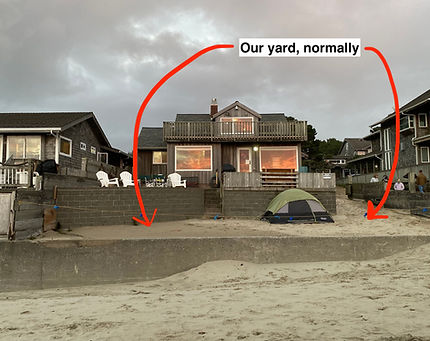

For more than 50 years, our family has dug the wind-blown sand off our own property (at our own expense & with the city's approval!)
Last year, the state made it illegal. We disputed this ruling and lost.
We're appealing — but the dunes aren't waiting. Our home is soon to be totaled by the sand. We will not be the last house to go. This precedent affects our whole town.
Or reach out to us: niedermeyer@comcast.net
What's happening?
Every year, tens of tons of wind-blown sand pile against our home in Cannon Beach. For more than 50 years, our family has paid — out of our own pocket, with a city permit — to push it back onto the beach with an excavation crew. The same routine work kept the public beach-access path beside us walkable for everyone, including visitors with limited mobility.
Last year, that changed. The Oregon Parks and Recreation Department went around our city and refused to let us continue. Nothing about the sand changed — only the permission did.
In effect, it is now illegal for us to do basic maintenance on our own property.
Month by month, the dune climbs the walls of a house that's stood here for generations. We aren't asking for special treatment — only to maintain our own home. Only to do maintenance on our own property lines.
See the change


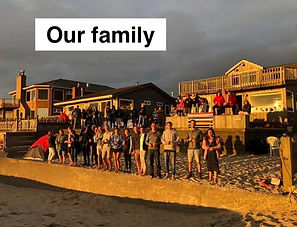
The timeline
-
1970–1990: Local construction company regularly removed sand from our property at no cost based on an informal, handshake agreement.
-
1991: City manager intervened, requested that sand removal cease, and initiated legal action against us for removing sand from the beach.
-
1992: We won a court decision confirming there was no foredune on our property. The city then issued a permit allowing legal sand excavation, endorsed by the Oregon Parks and Recreation Department (OPRD), valid for 32 years.
-
2024: Applied for a permit to conduct annual beach dugout. Approval was delayed as OPRD requested resubmission and additional information.
-
2025: Submitted multiple applications and explanations due to continued sand accumulation. The permitting process ended with a final denial in February. In March, attorneys were hired to assist with legal challenges.
-
February 5, 2026: Contested-case hearing occurred after a year of filings and procedural steps.
-
April 30, 2026: Administrative law judge issued a proposed order favoring the state, resulting in a loss for our side.
-
May 19, 2026: Filed exceptions to the proposed order, with attorneys expressing confidence in our legal position. This step is just ahead of the next phase of appeals should OPRD issue an adverse final order. We see quick end in sight as sand continues to accumulate and legal resources diminish, putting the family home at risk. Attorneys believe the law is clearly on our side.
-
Today: The sand keeps rising while we wait. We see no quick end in sight — sand continues to accumulate and our legal resources diminish, putting the family home at risk. Our attorneys believe the law is clearly on our side.
"Why don't you just dig it out anyway?"
We hear this a lot — and honestly, we understand the instinct. But we won't, for two reasons.
1. The penalties would be ruinous. This isn't a cheap parking ticket. Digging without permission exposes us to up to $1,000 a day in city penalties (a violation the law treats as a misdemeanor), plus up to $10,000 a day in separate state penalties. The state could force us to haul the sand back, sue us for double or even triple damages, and pursue it as a public nuisance enforceable by police. Worst of all, it would instantly destroy the appeal we've spent so much to build. The fine wouldn't save our home — it would end our case.
2. We're doing this the right way. We believe we're in the right, and we're going to act like it. We won't break the law to prove a point, and we won't hand the state an excuse to call us the wrongdoers. We're fighting this the honest way — through the law — because that's exactly the ground we should win on.
How you can help
This is fixable — and public attention can massively help. Here's how you can help most, in order:
1. Email Oregon's Governor - Tina Kotek. Use the button below, or her office's contact form. If you live in Oregon, say you're a constituent — it carries more weight.
2. Contact your own state legislators. A message from a lawmaker's constituent lands harder than a stranger's. (Find yours at oregonlegislature.gov.)
3. Email a reporter and share this page. A button with a pre-filled email for KATU, The Oregonian, KOIN, and FOX 12 is below.
4. Support the legal expenses of our appeal. We're nearly out of resources fighting just to maintain our own home; anything helps cover legal fees. We aren't asking the state for money or favors. We're asking to be left alone to care for the home our family has kept for over 50 years.


Or reach out to us: niedermeyer@comcast.net
Want to get in touch with us? Have any ideas? Have any way to help? Send us an email!